Can multilateralism stop the conflict in the South China Sea becoming a zero-sum game?
Introduction
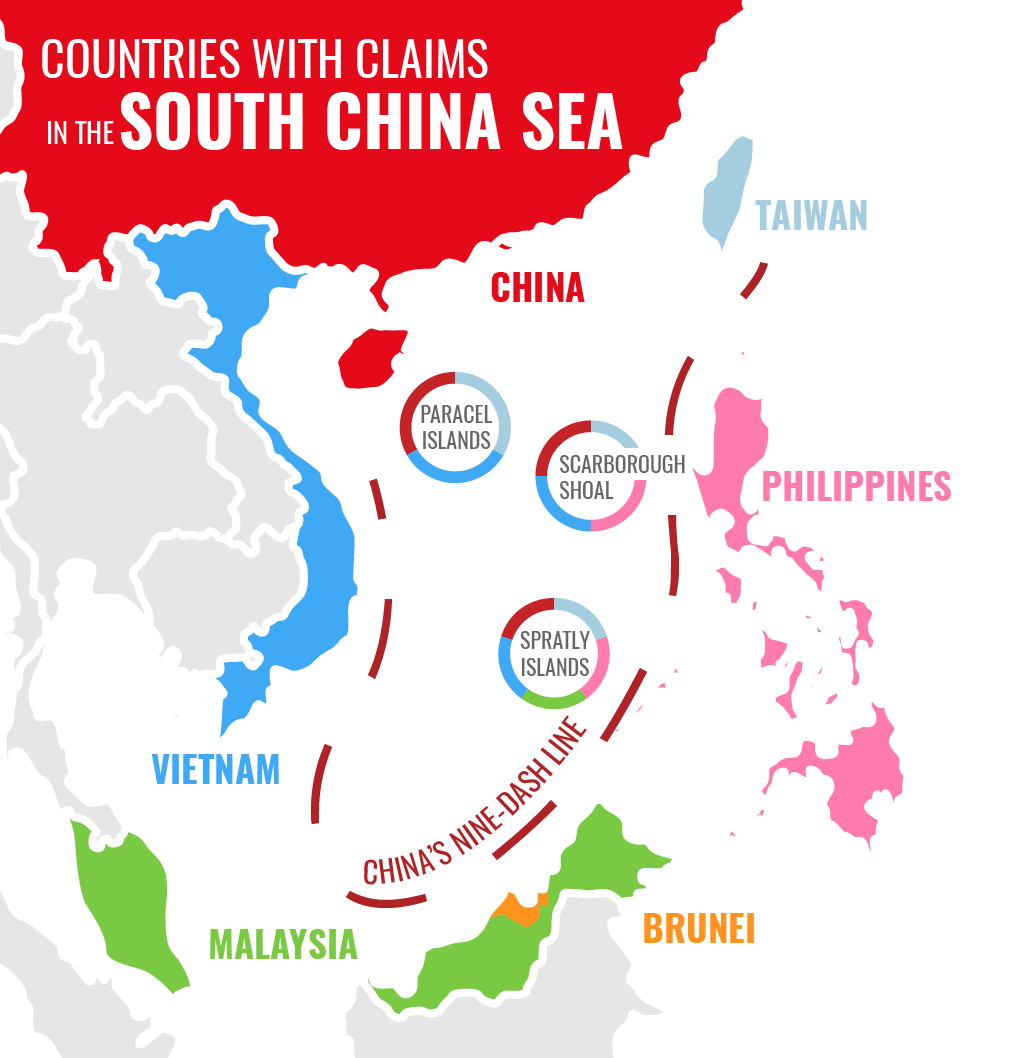
The South China Sea (SCS) is the name given to a stretch of water in the Pacific Ocean that extends from the Taiwan Strait in the north to the island of Borneo in the south. The sea has several countries bordering it; China, The Philippines, Malaysia, Vietnam, Taiwan, Indonesia and Thailand. Consequently, there are competing claims amongst these countries as to who has the rights to exploit the resources that the area offers. It has an abundance of fish and surveys have suggested that there are large reserves of gas and oil. There are multiple islands in the SCS, and these are also claimed by the different countries that border it. The crisis in the SCS is not just of concern to those countries in its immediate vicinity. The sea is one of the busiest trade routes in the world with over $5 trillion of trade transitioning through it every year (Regilme Jr, 2018). It is an area of great strategic importance to, not only China and the Association of South East Asian (ASEAN) countries, but to the United States, Australia and India. Due to the volume of trade, the control of the SCS is also of interest to the rest of the world, with the Arab states and the EU expressing concern with the ongoing crisis.
Since the end of the Cold War, the West has assumed that the spread of liberal democracy would continue. The US, as the key driver of multilateral diplomacy has tried to maintain its position as arbiter of what it right. However, with the development of other countries such as Brazil, Russia, India, China and South Africa (BRICS), the US’s hegemony is being challenged globally. The style of multilateralism spread by the US has not been accepted everywhere, especially in countries who have suffered from colonialism. The importance of a new style of multilateralism, one not driven by a singular power has the potential to bring countries together to solve disputes.
China, regardless of its actions, argues that it does not want to be seen in the same light as imperialist countries of the past, its foreign policy uses Westphalia language to describe the sovereignty of states. If it is serious about the way it is seen it should arguably apply this to its SCS policy. ASEAN also need to be able to come together to find a way forward, as currently they are arguing amongst themselves and China is using this as an advantage by attempting to strike bilateral deals to its benefit. This essay will begin with a broad overview of multilateralism through a liberal lens, a brief reflection on pertinent historical points behind the current crisis. It will consider the potential for a zero-sum outcome, using the arbitration case by brought by the Philippines against China. It will then conclude that for conflict to be avoided there needs to be a concerted effort by all parties to engage multilaterally and to consider how they are perceived by the world and what outcome is most likely to improve each country economic outlook and security, to avoid a zero-sum game.
Multilateralism and liberalism
There has been a rise in the number of multi-lateral, inter-governmental, organisations since the end of the Second World War, in many cases to prevent the outbreak of another catastrophic conflict. The repercussions of another war on the scale of WW2, with the added threat of nuclear weapons, is a clear justification for using all available resources to avoid another global war. With increasing interconnectivity of the world and the growth of multi-national corporations and business, it was also important global rules exist to enable fairer trade and prosperity for all stakeholders. An early proponent of internationalism was Immanuel Kant (Russett, 2016). He believed in the potential of a federation of states, governed individually, but linked by federal institutions, much like the EU is today (Russett, 2016). Kant’s view did not oppose the realist idea of states being self-interested, but that it would be to their mutual benefit to collaborate in order to increase global security.
Kantian influences on the state of the world, and why multilateralism could lead to a peaceful and prosperous world are threefold (Adiputera, 2014): the first influence is that of democracy; it is unusual for democracies to engage in war as they must consider the will of the people given that it is they who suffer, it is not in the interest of country to engage militarily. In a democracy, negotiations and compromise are the vehicles of change and not threats of violence or the restriction of liberty. Democratic leaders also face being voted out of office should the war become protracted or end badly (Russett, 2016). History is littered with examples of leaders whose time in office was tarnished by war, for example Tony Blair and the Iraq War and Lyndon B. Johnson and Vietnam, both leaders who could have greatly improved their countries had they not been involved in wars with no end in sight. Conversely, dictatorships frequently use violence and threats to control their population because rulers in such countries are not appointed by the consent of the people and therefore are not compelled to protect them from the repercussions of engaging in warfare. However, there power is not limitless, therefore consideration should be given to if, when and how they engage in warfare as sufficient resistance from the populace could result in a coup. A dictatorship has a choice between oppressing its people to such a level that there is no chance of a coup, like North Korea, or doing enough for the people as to pacify them and perceive the leader as a benevolent force.
Secondly, international trade has become the bedrock of many international relationships. When countries trade, it is to be expected that trade links will not be disrupted by conflict, riots or protests and as trade grows, the importance of peace increases. States that wish to invest in other countries, to exploit resources or labour, to improve their reach or to help industry grow, should be reluctant to deal with countries that are unstable or have the potential for regime change. That is, unless regime change is a motive, or an ambition.
The third factor is that of international organisations which exist in different forms; formal; informal; functional; multi-purpose; universal or region specific. The United Nations (UN) is a universal, formal organisation which aims to keep peace and security throughout the world, as it has at its core a belief that all countries will work in partnership to enhance human flourishing. It has within it, various other international organisations that monitor and control issues related to trade, security, banking and communications amongst others. Other regional organisations such as the Asia-Pacific Economic Cooperation (APEC) and the Association of South East Asian Nations (ASEAN) are less formal but model themselves on more established organisations such as the EU. These regional groupings of nations have developed in order that countries work in larger groups with more political and economic power, able to compete more equally with their counterparts.
Liberal international relations theory posits that human beings and, therefore, states are perfectible and are aiming towards a free and democratic world with market capitalism ensuring that everyone benefits from the system (Burchill, 2004). However, it has been Western thought that has guided this principle, with the US being the main driver of its own brand of liberal democracy throughout the world. Liberalism and multilateralism are intrinsically linked due to the need for states, and the actors within it, to believe that there is a way for countries to engage in a peaceful way, that states can prosper together, aiming towards a shared goal of a freedom and prosperity. However, it is not so that liberal democracies are always peaceful towards other states, thus contradicting their own articulated, overarching principles. In the 20th and 21st Century Western states such as the US and UK have used military force against several countries, taken part in proxy wars throughout the world and sponsored regime change throughout the global south (Chomsky, 2003). Most engagements in countries such as Vietnam, The Iraq War and toppling of dictators in South America have been justified on the grounds of freeing countries from regimes and installing the hegemonic idea of liberal democracy. It is arguable that the forceful propagation of liberalism across the globe is done only in the interests of the states forcing it on particular country which nods to the paradox of forced freedom. Many countries that have become democracies, have however benefitted from the increase in trade and becoming part of the global community, but at what cost to that countries culture and identity (Ben-Porath, 2010).
Not all countries have embraced liberalism; Fukuyama’s declaration of the End of History argued for the domination of liberal democracy over the communist ideals of the Soviet Union (Fukuyama, 1989). China, a communist country from Mao Tse-tung’s victory the civil war in 1949, while opening up to trade under Deng Xiaoping in 1978 (Economy, 2018), has not moved towards adopting liberal ideas. When the country opened its doors to the growing dominance of a neo-liberal capitalist agenda, it’s main contribution to the world economy was that of cheap labour and production of goods, something it is moving on from now as it becomes more technologically advanced (Tsokhas, 2017). Once China opened itself to the West, liberal democracies, such as the US, recognised the significant potential market of a country with over a billion people. Fukuyama’s declaration has not come to fruition; China has maintained communist rule while benefitting from incredible economic growth over the last three decades. While the Chinese Communist Party (CCP), who have governed since Mao, rules like a totalitarian dictatorship, the economic growth has meant that a large percentage of the agrarian society that were promised the dream of high-rise apartments, leisure time and modern living under Mao have achieved just that. This notwithstanding, there remains significant income inequality in China, but there are few countries where so many people have been dragged out of extreme poverty so quickly. If China had not opened itself to trade it might not have gained as much influence on the world stage or experienced as high levels of economic growth. However, China still maintains a version of the same political system created by Mao Tse-tung. The CCP has over 90 million members and shows no signs of moving towards the liberal democratic system that dominates the West.
Despite its exposure to the west China still maintains historical claims that have routes in its ancient history as well as claims made since the CCP came to power, such as the One China Policy, which states that Taiwan is still a part of China. When the communists won the war on 1949, the nationalists moved to the island of Taiwan in the hope that they could once again rule China. The CCP refuses to engage with countries that recognise the sovereignty of Taiwan. China’s other regional interests include the regions of Tibet and Xingjian, which have come under greater scrutiny during Xi Jinping’s premiership. Xi has also made the South China Sea a priority during his time in power.
The South China Sea Crisis
Over (US)$3 trillion of trade transits through the South China Sea, which is approximately one third of global trade (SCMP, 2019). It is a constituent part of the Pacific Ocean and has several countries bordering it, including: China, Philippines, Vietnam, Brunei, Malaysia and Taiwan. The area is dotted with hundreds of small and medium sized islands to which that various countries have competing claims (Kipgen, 2018). Not only is it one of the most vital trade routes, there is reported to be large reserve of oil, gas and minerals beneath the surface (ibid). Therefore, it is not only countries that immediately border it that have an interest. South Korea, Japan, Australia, India and the US all have a vested interest in the area as maritime powers, as do countries and blocks further afield such as India (Granados, 2017) and the EU (Nengye & Qi, 2018).
In 1947, the then Republic of China circulated a map illustrating, what is now known as, the nine-dash-line (Wallace, 2014), a broken line that delineating the area of the SCS to which China lays claim (Scott, 2016). The area encompasses eighty percent of the SCS, including the islands which other countries claim and encroaches into their Exclusive Economic Zone (EEZ); the two hundred miles which extends from a country’s shore for which they have economic right under the United Nations Convention of the Law of the Sea (UNLCOS). China has yet to give precise grids to verify the exact area this line covers. In an arbitration case in 2016, using the 1982 United Nations Convention on the Law of Sea, the UN ruled that China has no legal basis for the claims made using the nine-dash-line map (Nguyen & Phan, 2018).
Conflicts in the SCS have, thus far, avoided escalating to full scale war. However, there has been conflict between China and Vietnam (Zhang, 2010), when in 1974 China seized the Paracel Island Group, and again when they occupied Johnson Reef. In 2014, China placed an oil rig in Vietnam’s EEZ which caused a confrontation between The Coast Guard and fishing boats on both sides (Bui, 2017).
Throughout this time, China has maintained its claim to all encompassed by the nine-dash-line. Of particular interest to several of the states involved is the area of the Spratly Islands, a group of islands that the Philippines claim is within it’s EEZ, however, China, Taiwan, Malaysia and Vietnam have all laid claim to some of, or all the islands at some point (Hasan & Jian, 2019). China has been developing infrastructure on the Islands, specifically Fiery Reef, on which it built a weather station in 1997. Over the last five years it has accelerated its reclamation of land, and now has a fully functioning runway, accommodation buildings, a seaport, garrison, and what appears to be anti-aircraft missiles and other defences (Takei, 2017). China’s continued expansion into the SCS has not been one large occupation but a salami slicing tactic, taking a piece at a time in order to not be conspicuous. The smaller countries bordering the SCS have, on occasion, tried to work together to counter the force of China with varying degrees of success. One such multi-lateral grouping that has attempted to tackle situation is the Association of South East Asian Nations.
The Association of South East Asian Nations (ASEAN)
ASEAN, the multi-lateral, regional, intergovernmental organisation consisting initially of Indonesia, Malaysia, Philippines, Singapore and Thailand was formed in 1967. One of the reasons for such a group to form was as a result of increasing fear of the spread of communism (Oba, 2014). By 1999, Brunei, Laos, Myanmar and Cambodia had also joined, creating a regional group of nearly 650 million people. ASEAN became involved in the SCS dispute in 1992 when China and Vietnam started exploration activities and ASEAN tried to intervene diplomatically in order to avoid escalation (Kipgen, 2018). In 1994 the Philippines petitioned the remainder of the ASEAN members to come together and work against China. This was a defining moment in its history and engagement with the continuing crisis in the SCS, which resulted in creating a Code of Conduct to try and limit China taking over more land.
One of the founding principles of ASEAN was that of respecting each countries’ sovereignty, an important aspect considering the differences between the countries, and that decisions on how to act would be made by consensus (Kipgen, 2018). However, if there is a disagreement they could be locked in a diplomatic stalemate for years. The situation between China and ASEAN is one such example of this outcome. China does not want to engage with ASEAN as a single unit, preferring to engage bi-laterally with countries, perhaps due to the power differential in hope of preferential treatment due to their influence in the area. Progress is also hampered as the ASEAN countries themselves have struggled to have unifying polices with regards to some islands within the SCS, as disputes continue around who controls the islands (Bjola & Kornprobst, 2018). The crisis will not be solved without multi-lateral engagement. Not only as the countries directly involved have a lot at stake, but as previously mentioned, other major states and blocks have a vested interest in the area.
Zero-Sum Game
A zero-sum game is an outcome whereby the gain of actor A is offset by the loss of actor B (Collins Dictionary). There is potential for multiple zero-sum outcomes: China, in many of its disputes over territory, and its actions in claiming certain areas, has done so at the expense of the other states in the area, resulting in the other claimants losing as much territory as China are gaining. If China continues to occupy more islands in the SCS, there is the potential of taking control of the trade routes that other countries rely on. The US has been relied upon by some of the ASEAN members, particularly Vietnam and the Philippines, for security and therefore, it is necessary it stands by its commitments as well as acting to protect its own interests in keeping the trade routes open (Regilme Jr. 2018).
Since the middle of the 20th Century, the US has been the one hegemonic superpower in the world (Ikenberry, 2015). China’s continued growth has led many commentators to suggest that China could overtake the US as the world’s hegemon. This could potentially be a zero-sum game, if China’s rise is at the expense of the US’s power and there is also the fear of such a situation escalating into war. It has been suggested that China’s rise coupled with the US’s decline in influence could lead to a Thucydides trap, a term coined by political scientist Graham Allison and referencing a state of affairs in international politics. It was first written about in a history of the Peloponnesian war, by Thucydides, an Athenian General who argued that when there is one great power in the world that is challenged by the rise of another, there is likely to be a preventative war instigated by the waning power, to ensure its hegemony remains unchallenged (Yoder, B 2019). Again, this suggests a zero-sum outcome, for the US and China.
The Spratly Islands
The group of small islands that have been named, in the West, the Spratlys’ were first claimed by a Filipino adventurer named Captain Tomas Cloma Jnr (Hasan & Jian, 2019). At the time they were uninhabited but had been used by various nations, including the Chinese, Japanese and French and British sailors (ibid). Over the next few decades The Philippine government took steps to ensure that the islands were officially their land. According to UNCLOS a country’s EEZ extends 200 miles from their shore (Nemeth, et al. 2014) and therefore most of The Spratly Islands are part of the Philippines. In 2013 The Philippines successfully challenged China on ownership of several of the islands which led to a tense stand-off as China used military dominance to force the Philippines to back. China was not alone in trying to lay claim to the islands and throughout the 80s and 90s Vietnam and China both tried to control various areas. This resulted in China starting to build on Mischief Reef, and The Philippines re-engaged with the US in the hope of military support if it was needed (Valencia, 1999). Despite these ongoing disputes, China was engaged in diplomatic dialogue with ASEAN and a Code of Conduct was agreed in 2002 that aimed to stop the building on any other contested islands or atolls (Kipgen, 2018). The increasing wealth and international power of China at the time, coupled with the US’s historical, and current, interest and investment in the area meant that the ASEAN countries now had a choice as to who to deal with. However, both the US and China had greater interest in engaging with countries individually in bi-lateral deals rather than ASEAN as a whole (Regilme Jr, 2018), due to the increased diplomatic sway of the unified block. With China pursuing bi-lateral diplomacy with The Philippines over the Spratly Islands, the tension in the SCS eased, China invested heavily in The Philippines and helped its economy grow significantly (De Castro, 2018).
As China’s economy has continued to grow the CCP has invested heavily in its military, especially its navy. The Peoples Liberation Army Navy (PLAN) has grown in strength with multiple destroyers and submarines at sea with aircraft carriers on their way (Sheldon-Duplaix, 2016). This has led to China once again challenging for its territory within the nine-dash-line. In 2012 a standoff arose between the Philippine Navy (PN), Chinese fishermen, and the Chinese coastguard. The PN tried to deescalate the situation yet China sent more powerful boats to ensure that their fishermen could not be arrested for illegally fishing in the reef. Eventually the Philippines had to withdraw from the standoff as they were unable to contend with the Chinese boats (De Castro, 2016). The Philippines pursued diplomatic means to resolve the crisis by challenging China to bring its claims to the International Tribunal of the Sea, a challenge China ignored.
In 2013 the Philippines filed an arbitration case under UNCLOS with the Permanent Court of Arbitration. The court ruled in favour of the Philippines, that China had acted illegally in its occupation of the Spratly Islands and Scarborough Shoal (Nguyen & Phan, 2018). It also concluded that there was not a legal basis to the claims made by China under the nine-dash-line. China has effectively ignored the ruling and has continued to build and reclaim land on, and around the Spratly islands, Scarborough Shoal and other islands in the SCS.
As has been shown the crisis that exists in the SCS is not only limited to the countries in the area. The state that controls the SCS, and has a monopoly on the trade routes, and can exploit its resources will create issues for various countries. The US and some other countries carry out Freedom of Navigation Operations (FONOPS), in and around the SCS. Their intent is to highlight and reinforce to China that their claim to certain areas is not recognised by the US and that international waters form part of the SCS. Several of these FONOPS have resulted in ships colliding with each other. Such encounters could escalate and risk conflict (Alfieri & Sinisa, 2018).
Multilateralism: The only option left?
The multilateral world that was created at the end of the Second World and led by the hegemony of the US is declining (Ikenberry, 2015). The liberal world order that was strengthened further by the collapse of the Berlin Wall and the breakup of the USSR, is no longer maintaining its grip on the world’s narrative (ibid). Other countries, such as Brazil, Russia, India, China and South Africa (BRICS), did not have as much control of the created narrative. It was dominated by the West, promoting an international liberal consensus (Ikenberry, 2015). In the latter part of the 20th Century this worked. While all countries want to improve their standing in the world, to improve security, the economy and trade, they do not see the US led narrative as one that pertains to their evolution. Many of these countries have, in the past, been victims of states who now argue for human rights and global rules and regulations. Despite the problematic history, in order for a multi-lateral outcome to be successful, countries need to work towards a shared objective in the SCS to promote trade and avoid conflict. Furthermore, due to previous issues there cannot be one country controlling the narrative, this would risk perpetuating the mistakes made by previous hegemons.
Giddens (cited in Ikenberry, 2015) posits that any vision of modernity is reliant upon an overarching storyline. It does not necessarily mean that all the paths in that storyline have to be the same, but that the end goal of peaceful and prosperous nations is likely to be a unifying goal, even if nations do not agree on how it is achieved. China insists, in its dealing throughout the world, that it is not following the same path as the imperial powers of the past, or the neo-colonialism that the West is accused of today when they offer aid to countries in order to transform governments or enforce liberal democratic norms (French, 2018). If China does not wish to be compared with its former oppressors, the crisis in the SCS is the ideal opportunity to demonstrate its self-defined values.
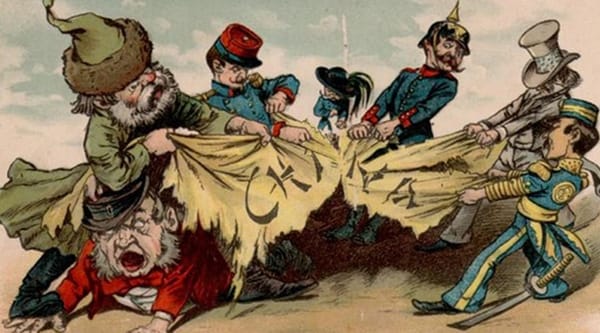
An argument for multilateral diplomacy need not be linked with an argument for global governance. China, a vocal proponent for the Westphalian system of states, does not think that other countries should intervene in sovereign states. As history has shown the West has been considerably more flexible with its use of human rights abuses to invade, bomb, or facilitate regime change in countries it decides need its help. China’s argument is that these issues should be dealt with internally, and not by an outside arbiter of what is right. However, China’s actions in the SCS have a historical parallel with the way in which the British forced their way into China, when the Daoguang Emperor refused to trade opium in the country. This ultimately led to the Century of Humiliation (Wang, 2014), the period of time from the First Opium War until the communists won a civil war in 1949 and Mae Tse Tung declared that China had “stood up”. China still utilises this idea to motivate its rule and is expansionism (French, 2018). This highlights a contradiction in China’s approach to the SCS. A route forward for China is to engage in multilateral diplomacy with ASEAN and all other countries invested in the region.
A ruling from from the UN will not, and indeed has not, impeded China’s expansionism. Furthermore, the US and other countries are unlikely to cease FONOPS, and ASEAN are unlikely to rescind their claims for territorial sovereignty of the area. The Code of Conduct that ASEAN and China have been engaging on, which has largely been ignored by all parties, is not scheduled to be completed until 2021. Whether when it is completed, it is ratified or adhered to is another issue. As it stands there is still a potential for a zero-sum outcome with regards to the SCS. China, through bilateral deals is willing to invest in countries in order to stop challenges to its hegemony in the SCS, but for every piece of land it takes, a country loses a part of it, or the international community loses a piece of international waters and trading routes.
While it is common in situations like this crisis for there to be a neutral arbitrator, this has already failed. China is unlikely to see the UN or any other international organisation as neutral, viewing it as a mainly western controlled organisation, which it had minimal input in its creation (Ikenberry, 2015). One cannot blame them for this, as mentioned above, most of these bodies were created in a time when the world was controlled by the West, with an eye on liberal democracy for all. Despite the hope of the West that Deng Xiaoping’s opening up of China would lead to their eventual capitulation to the West, there is no sign of this happening. Ideally there must not be any one state with more say than any other for a diplomatic solution to be found. While there have been flare ups of violence, the idea of countries going to war in the Pacific, is something that all countries must look to avoid. China must look for a way forward and a way to negotiate an advantage, while being able to move out of other nations EEZ.
One such solution would be for all countries in the SCS to accept UNCLOS and the 200-mile EEZ from their coastlines. If any of the SCS islands fall within that area then it is that country’s sovereign land, anything else is in international waters. Due to the potential resources in the SCS it would be in all the countries interests to come to an economic agreement to exploit these resources together. There is precedence for this in the ASEAN + 3, where trade deals have been struck (Meng, 2017). It will be difficult, if not impossible for any of the states to be able to extract oil and gas, or to be able to fish, if there is threat of violence and continued disagreement over who owns which part.
One of the issues with a multilateral approach is the history of the region. Several ASEAN countries have been in conflict with China or the US. Japan also has a vested interest in the SCS and their relationship with China has been fractious. China has never forgiven Japan for the Nanjing Massacre, something that is ingrained into the Chinese psyche and a driving force in the maintenance of nationalism that keeps the Communist Party in power (Wang, 2014). There are grievances that could be shared by every country, so they should be respected but not used to manipulate or give justification for actions. In many ways the path to a peaceful future in the SCS is dependant on China’s actions. The priority for ASEAN is to try and come to a consensus on how they want to proceed. This could force China to reveal their exact claim under the nine-dash-line which would then give the international community something solid to challenge. The more China is seen to be non-committal in its dealing with the international community the less seriously it could be taken. Considering the ambition that China appears to have on the world stage, creating the conditions for it to seem indecisive or noncommittal to progress could tip the balance in favour of negotiation.
Conclusion
The crisis in the SCS has been an issue for decades, and resolution is unlikely with the current trajectory. All states that are engaged in some form of diplomacy currently seem to have a realist perspective and are concerned with their own interests with scant regard for the consequences of their actions. The spread of multi-lateral diplomacy after the Second World War was led by the West and in particular the US. Understandably, having Western countries be the arbiter of how sovereign nations should behave is unpalatable to those states who have suffered under the West’s controls or intervention. Trading the controlling power of the US, for the potential controlling power of China has the capacity to lead to the same problems of regional, and possibly global hegemony. As stated, China does not want to be seen in the same light as the imperial powers of old, or as the world’s police force as the US has been. One must hope that all countries want what they think is best for their people, and the millions in China that have been dragged out of poverty over the last few decades show that China is trying to make its country better. The risk of war between ASEAN and China, or China and the US, is not one that should be taken lightly so a way forward must be found. If China was to take the lead, while not dictating, they could improve their standing in the international community, ensure rights of access for all to the SCS, avoid more conflicts in the area and create the potential for all claimants to gain, instead of some losing for to others gain in zero sum game. As it stands, no countries can fully benefit from the SCS resources due to the risk of setting off an international incident. The overarching story of this area might not be the spread of liberal democracy, but it could be a story of prosperity and peace, with a rising China at the helm.
References:
Adiputera, Y. (2014) Evaluating the Normative and Structural Explanations of Democratic Peace Theory. Indonesian Journal of International Studies. 1 (1). 21-30. [Accessed 10 December 2019].
Alfieri, R. and Vukovic, S. (2018) Bumping, precedents, and de-escalation in South China Sea: Options for the United States and China. Asia and Pacific Policy Studies. 2018 (5). 665-671. Wiley Online Library. [Accessed 12 January 2020].
Ben-Porath, S. (2010) Exit Rights and Entrance Paths: Accommodating Cultural Diversity in a Liberal Democracy. Perspectives on Politics. 8 (4). 1021-1033. Cambridge University Press. [Accessed 13 January 2020].
Bui, N. (2017) Managing anti-China nationalism in Vietnam: evidence from the media during the 2014 oil rig crisis. The Pacific Review. 30 (2). 169-187. Taylor and Francis Online. [Accessed 11 January 2020].
Bjola, C. and Kornprobst, M. (2018) Understanding International Diplomacy. New York: Routledge.
Burchill, S. et al. (2004) Theories of International Relations. [Online]. ProQuest Ebook Central. Available at: https://ebookcentral.proquest.com/lib/lancaster/detail.action?docID=296496
Chinese Society of International Law (2018) The South China Sea Arbitration Awards: A Critical Study. Chinese Journal of International Law. [pdf] Oxford: Oxford University Press. Available at: https://academic-oup-com.ezproxy.lancs.ac.uk/chinesejil/article/17/2/207/4995682 [Accessed 12 January 2020].
Chomsky, N. (2003) Hegemony or Survival: America’s Quest for Global Dominance. New York: Metropolitan Books
De Castro, R. (2016) Facing Up to China’s Realpolitik Approach in the South China Sea Dispute: The Case of the 2012 Scarborough Shoal Stand-off and Its Aftermath. Journal of Asian Security and International Affairs. 3 (2). 157-182. Sage Journals Online. [Accessed 12 January 2020].
De Castro, R. (2018) 21st Century U.S. Policy on an Emergent China: From Strategic Constrainment to Strategic Competition in the Indo-Pacific Region. International Journal of China Studies. 9 (3). 259-283. ProQuest Online. [Accessed 12 January 2020].
Chomsky, N. (2003) Hegemony or Survival: America’s Quest for Global Dominance. New York: Metropolitan Books
Collins Dictionary. Definition of a zero-sum game. Available at https://www.collinsdictionary.com/dictionary/english/zero-sum-game [Accessed 11 January 2020].
Economy, E. (2018) The Third Revolution. New York: Oxford University Press.
Granados, U. (2018) India’s Approaches to the South China Sea: Priorities and Balances. Asia & the Pacific Policy Studies. 5 (1). 122-137. [Accessed 12 January 2020].
Fukuyama, F. (1989) The End of History. The National Interest. 3-18. Shrub Oak. [Accessed 2 January 2020].
French, H. (2018) Everything Under the Heavens: How the Past Helps Shape China’s Push for Global Power. New York: Penguin Random House.
Hasan, M. and Jian, H. (2019) Spratly Islands Dispute in the South China Sea: Potential Solutions. Journal of East Asia & International Law. 12 (1). 145-168. EBSCO Host. [Accessed 11 January 2020].
Ikenberry, G. (2015) The Future of Multilateralism: Governing the World in a Post-Hegemonic Era. Japanese Journal of Political Science. 16 (03). 399-413. Cambridge Journals. [Accessed 11 January 2020].
Kipgen, N. (2018) ASEAN and China in The South China Sea Disputes. Asian Affairs. 49 (3). 433-448. Taylor and Francis Online. [Accessed 11 January 2020].
Meng, L. (2017) “Sea of Cooperation” or “Sea of Conflict”? The South China Sea in the Context of China-ASEAN Maritime Cooperation. International Journal of China Studies. 8 (3). ProQuest. [Accessed 12 January].
Nengye, L. and Qi, X. How Might the European Union Engage Constructively with China in the South China Sea? Ocean Development & International Law. 49 (4). 301-312. Taylor and Francis Online. [Accessed 12 January 2020].
Nguyen, L. and Phan, H. (2018) The South China Sea Arbitration: Bindingness, Finality, and Compliance with UNCLOS Dispute Settlement Decisions. Asian Journal of International Law. 8 (1). 36-50. Cambridge University Press Online. [Accessed 11 January 2020].
Oba, M. (2014) ASEAN and the Creation of a Regional Community. Asia-Pacific Review. 21 (1). 63-78. Taylor and Francis Online. [Accessed 11 January 2020].
Regilme Jr, S. (2018) Beyond Paradigms: Understanding the South China Sea Dispute Using Analytic Eclecticism. International Studies. 55 (3). 213-237. Sage Journals Online. [Accessed 11 January 2020].
Scott, S. (2016) China’s nine-dash-line, international law, and the Monroe Doctrine analogy. China Information. 30 (3). 296-311. Sage Journals. [Accessed 11 January 2020].
Sheldon-Duplaix, A. Beyond the China Seas: Will China Become a Global “Sea Power”? China Perspectives. 2016 (3). 43-52. EBSCO host. [Accessed 12 January 2020].
South China Morning Post (2019) Explained: The South China Sea Dispute. 16 Feb. Available at: https://www.scmp.com/week-asia/article/2186449/explained-south-china-sea-dispute [Accessed 11 January 2020].
Takei, T. (2017) The New Time and Space: Dimensions of a Martime Defence Strategy. Naval College Review. 70 (4). 48-68. [Accessed 11 January 2020].
Tsokhas, K. (2017) Florian Butollo, The End of Cheap Labour? Industrial Transformation and “Social Upgrading” in China. Journal of Contemporary Asia. 47 (1). 162-166. Taylor and Francis Online. [Accessed 13 January 2020].
Valencia, M. (1999) Mischief at the Reef. Far Eastern Economic Review. 162 (20). 31. [Accessed 11 January 2020].
Wallace, D. (2014) An Analysis of Chinese Maritime Claims in the South China Sea. Naval Law Review. 128. Hein Online. [Accessed 11 January 2020].
Wang, Z. (2014) Never Forget the Humiliation. New York: Columbia University Press.
Yoder, B. (2019) Uncertainty, Shifting Power and Credible Signals in US-China Relations: Why the “Thucydides Trap” Is Real, but Limited. Journal of Chinese Political Science. 24. 87-104. Springer Journals Online. [Accessed 23 December 2019].
Zhang, X. (2010) Deng Xiaoping and China's Decision to go to War with Vietnam. Journal of Cold War Studies. 12 (3). 3-29. Project Muse. [Accessed 11 January 2020].